
About geothermal
The furnace is dead. The ground under you is not.
Six feet down, mid-Atlantic soil holds 57°F every day of the year. Geothermal borrows that steady temperature to heat and cool your house for a fraction of what burning fuel costs.
The system
Three parts, no combustion
01
The ground loop
Fluid-filled HDPE pipes buried in the ground, or sunk in a pond, next to the building. The mid-Atlantic earth below the frost line holds a steady 57°F all year; the loop borrows it.
02
The heat pump
A WaterFurnace unit indoors takes that 57°F and concentrates it: into heat in January, out of the house in July. Same trick as your refrigerator, run in both directions.
03
The delivery system
Your existing ductwork, or hydronic water for radiant floors and baseboards. A desuperheater can peel off waste heat for free-ish hot water while the system runs.
- 57°F
- constant mid-Atlantic ground temperature
- 46%
- of the sun's energy stored in the earth
- $5
- of energy delivered per $1 of electricity
- 500%+
- typical system efficiency
See it, do not take our word
Two minutes of geothermal, on film
WaterFurnace explains the technology better than any brochure. Worth the watch before your site visit.
The ground loop
Four ways under your yard
The loop is the part nobody ever sees again, which is why we drill it ourselves instead of subcontracting. Which type fits depends on your lot, and the site visit settles it.
Most common
Vertical loop
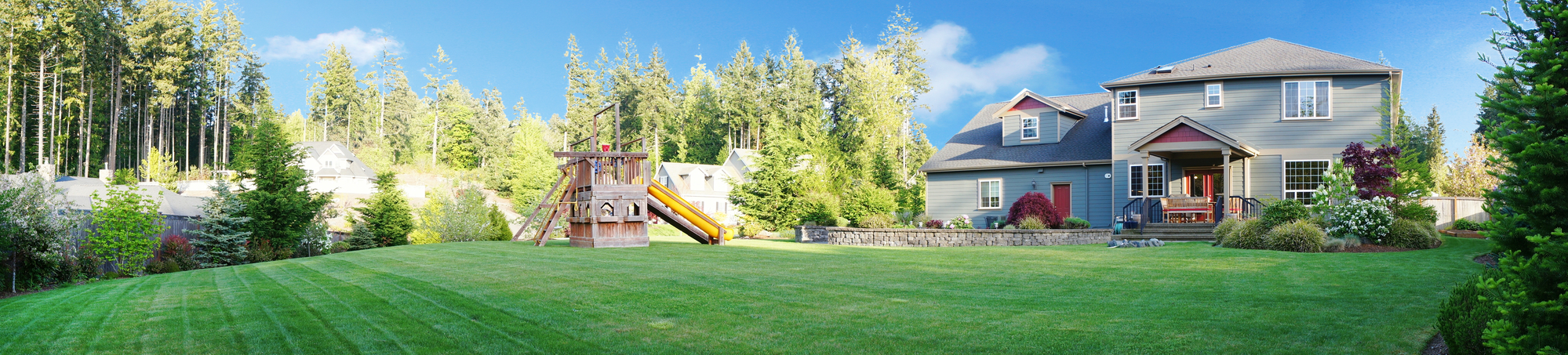
For normal-size lots. A rig bores holes 150 to 450 feet down, a U-shaped coil of high-density pipe goes in each, and the yard is back to normal in days.
Big lots
Horizontal loop
Trenches 5 to 8 feet deep across open land. Cheaper to dig when you have the acreage to spare.
Waterfront
Pond loop
Coils sunk in a pond or lake at least 8 feet deep. The cheapest loop of all when the water is already there.
Well water
Open loop
Uses well water directly as the heat-exchange fluid, then returns it. Needs the right water quality and local rules.
Why owners do not go back
The benefits, without the brochure voice
40-80% off utility bills
Savings start the day the system turns on. Homes gain roughly $20 of market value for every $1 of annual utility savings.
500%+ efficiency
One unit of electricity moves four or more units of heat from the ground. Every fuel-burning system tops out below one.
Quiet and steady
No outdoor condenser, no blast cycles. Steady temperatures and about 45% indoor humidity in summer.
Nothing outside
The whole unit lives indoors. The loud, rusting box next to the patio is gone.
25+ year unit life
Three moving parts. The buried loop is maintenance-free, will not freeze, and carries a 50-year warranty.
Lowest emissions
No combustion at the house: no carbon monoxide, no flue, and the lowest emissions of any heating and cooling technology.
Find out what your house would save
Free site visit, fixed-price proposal, every incentive calculated for your address.
Common questions
Asked at nearly every kitchen table
Can it cover 100% of my heating and cooling?
Yes. A properly sized system carries the whole load, plus domestic hot water, and outdoor temperature swings do not touch it. Forced air and hydronic delivery both work, in new or existing homes.
Are all systems alike?
No. Every house gets its own design. Some systems heat and cool, some add hot water. Sizing and loop design are the whole game.
What size system do I need?
The one an ACCA Manual J load calculation says you need. Oversized and undersized systems both cause problems, which is why we measure instead of guessing.
How much indoor space does it take?
About the footprint of the furnace it replaces. The rest of the system is underground.
How long does it last, and what about warranty?
The unit runs 25+ years with three moving parts; major-parts coverage typically runs 10 years. The polyethylene loop is warrantied for 50 years, and independent tests put its useful life past 200.
Do I need new insulation or windows first?
No, the system saves regardless. But every $1 spent on the building envelope saves about $3 on the geothermal installation, so we will tell you if a cheap upgrade shrinks the system you need.
Will it need a bigger electrical service?
Almost never. The pump, compressor, and fan draw modest amperage; existing service is usually more than adequate.
Will the loop hurt my lawn?
No. Loops have no adverse effect on grass, trees, or shrubs, and install in everything from sand to granite. After a season you will not find the bore holes.
Do heating and cooling need separate loops?
No. The same loop pulls heat out of the ground in winter and pushes it back in summer.
Go deeper
How geothermal works
The heating and cooling cycles, with video.
The financial case
25 and 50 year math vs a new furnace and AC.
Incentives
Federal, Virginia, and Maryland money.
Financing
$0 down options and the dual-loan trick.
Replace an existing system
What a retrofit actually involves.
Net zero homes
Geothermal as the backbone of a net-zero build.
Service my system
Care for systems we did or did not install.
Contact
Talk to a person, not a phone tree
Question about your system, a strange noise, or just want a second opinion on a proposal you got elsewhere? Write or call, a geothermal designer answers both.